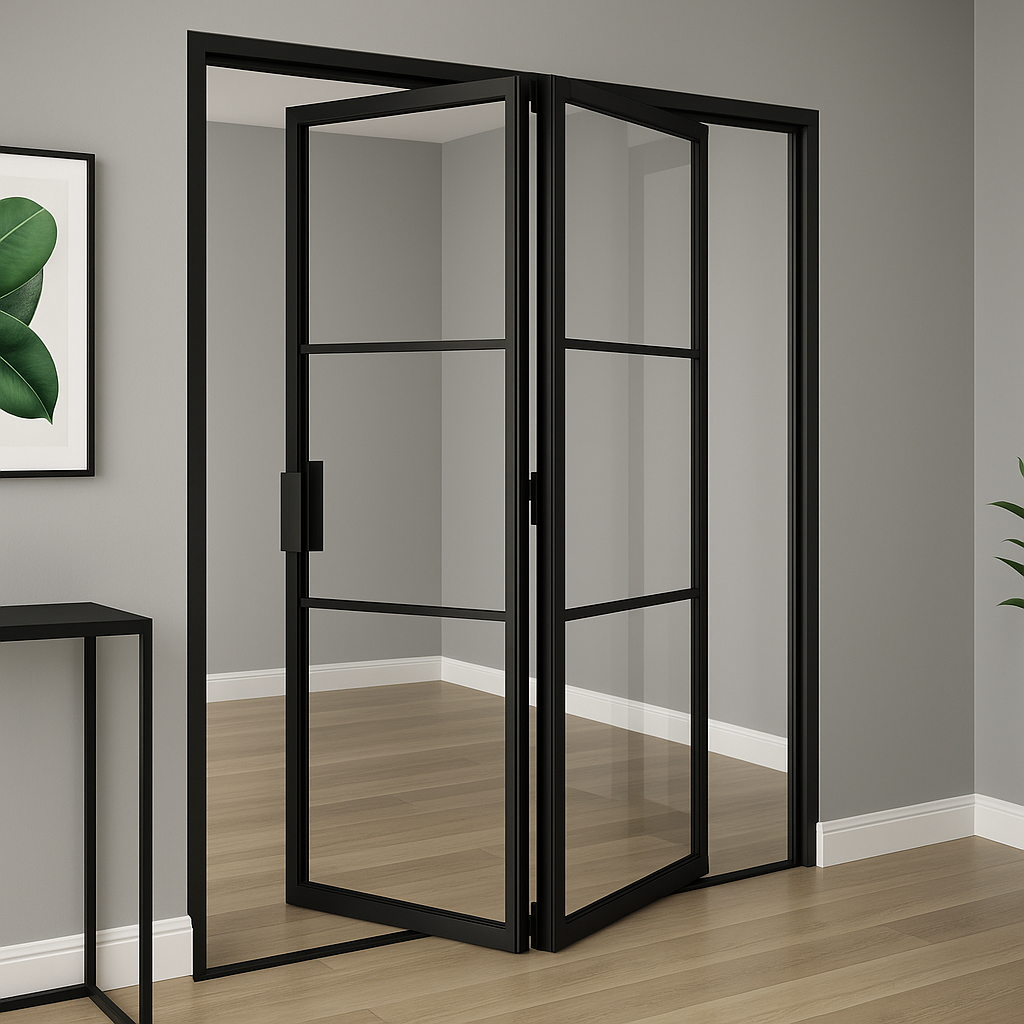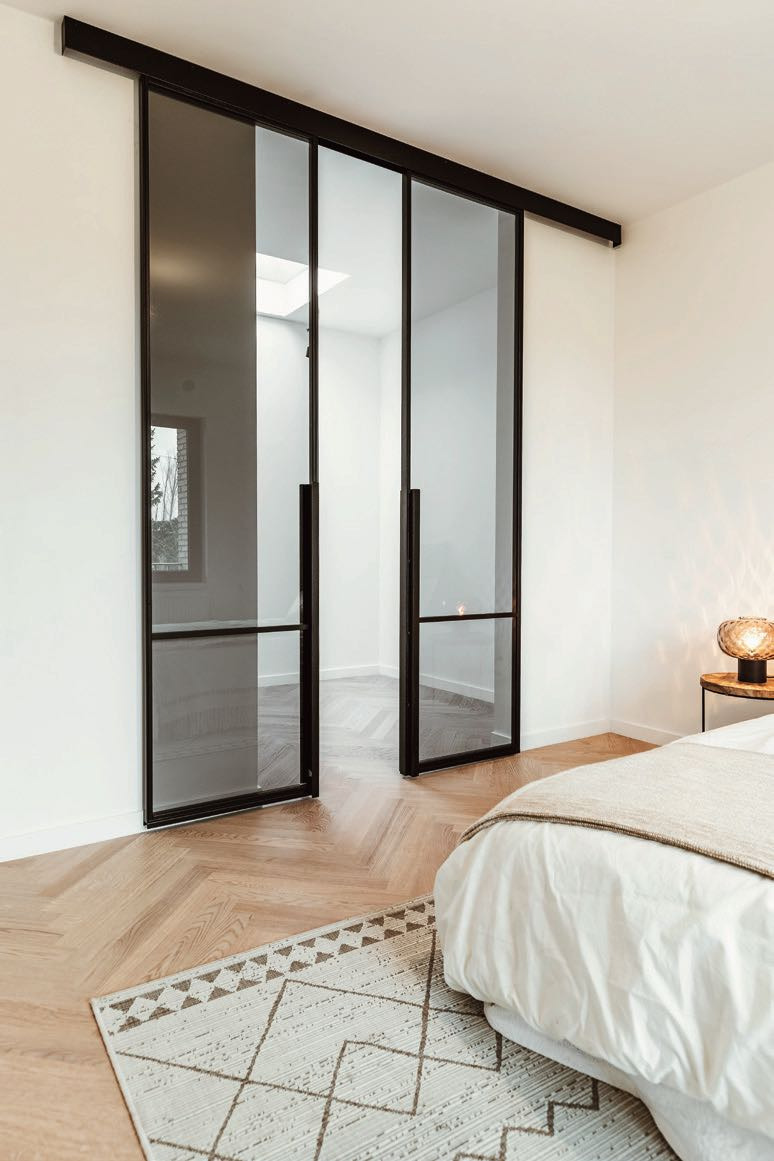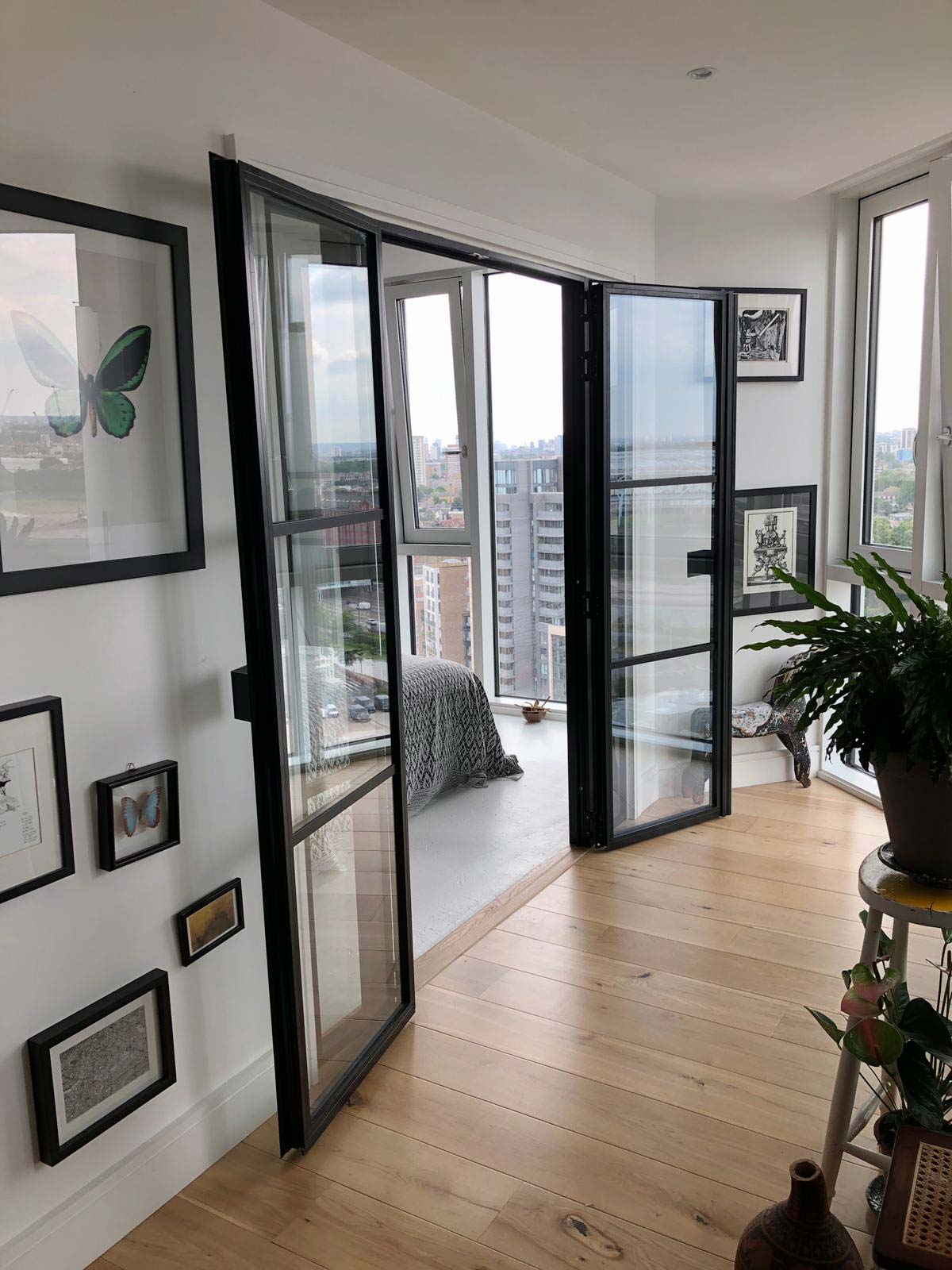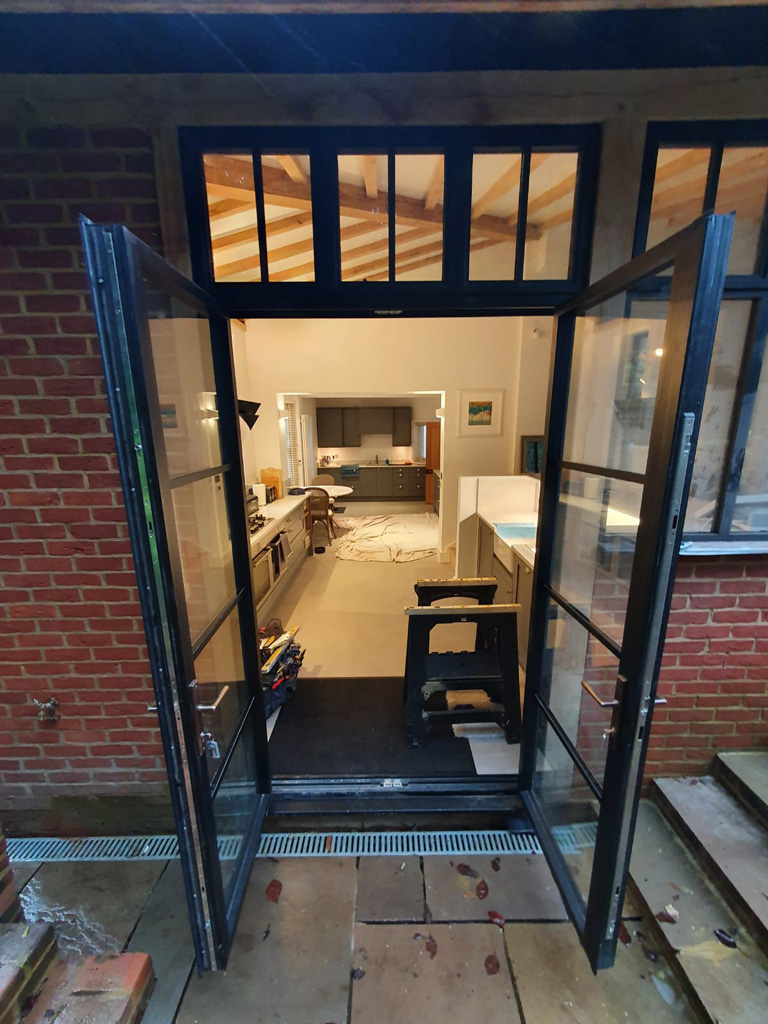
A modern living space featuring sleek black-framed internal french doors that divide rooms while maintaining an open feel.

Open-plan living once felt like the obvious answer. Remove walls, let light flow, create one generous space. But for many homeowners, especially those living in period houses, the reality has been more complicated. Sound carries. Daily life overlaps. Spaces lose their individual character. That is why the dining and living room partition has become such a thoughtful solution. Not as a step backwards, but as a way to regain control over how rooms connect and separate throughout the day. At Jennyfields, we design thoughtfully considered partitions and room dividers that allow dining and living spaces to work together without competing with one another. This is not about closing rooms off. It is about restoring balance. What a Dining and Living Room Partition Really Does A dining and living room partition is often described as a divider, but that undersells its role. In practice, it acts as a regulator, shaping how sound, light and movement pass between two spaces. Good partitions create visual continuity without full physical openness. You remain aware of the adjoining room, but you are no longer subject to everything happening within it. Conversations feel contained. Background noise softens. Each space regains its purpose. This is why a dining and living room partition can feel calmer than a completely open layout. You are not forced to choose between openness and privacy. You are setting the terms of how the two coexist. Why Period Homes Benefit Most From Thoughtful Partitioning Period homes were designed around sequence and proportion. Dining rooms, living rooms and halls each had a role, and the thresholds between them mattered. When those boundaries are removed entirely, homes can begin to feel flatter and less settled. Partitions allow you to improve flow without erasing structure. Instead of rewriting the layout, you refine it. Light is shared more intelligently. Sightlines open up. But the underlying rhythm of the house remains intact. This approach is particularly effective in period and heritage homes, where scale, symmetry and restraint matter just as much as modern performance. Architectural guidance consistently supports this more measured approach to opening up older houses, especially where character and comfort need to coexist. Types of Dining and Living Room Partitions That Work Best Different homes need different levels of separation. The key is choosing a format that supports how you actually live. Internal steel and glass doors Steel-framed glass doors offer one of the most balanced solutions. They provide clear separation when closed, while maintaining light and visual connection. When open, they sit neatly out of the way, restoring a sense of openness for entertaining or family life. They feel architectural rather than temporary, and their weight and precision make them reassuring to use every day. Explore internal steel glass doors designed for long-term use and calm proportions. Fixed glass partitions or internal windows In homes where flexibility is less important than consistency, fixed partitions work beautifully. These are especially effective where one room relies on borrowed light from another, such as a living room behind a brighter dining space. Because they do not move, fixed partitions tend to feel quieter and more settled. They frame views, distribute light and define zones without daily interaction. See how internal steel windows and partitions are used as permanent architectural features. Sliding or bifold partitions Where layouts need to adapt, sliding or bifold partitions allow spaces to change character across the day. Fully open for gatherings. Partially closed for zoning. Fully closed when quiet is needed. This flexibility suits family homes and kitchen-dining-living arrangements, provided the system is engineered to feel solid and smooth in daily use. Explore sliding and bifold room dividers designed to move easily and sit comfortably within period and contemporary interiors. Light, Noise and Everyday Comfort One of the most common concerns with partitions is light. In reality, glass partitions often improve how daylight moves through a home. Instead of stopping abruptly at a wall, light is shared, softening transitions between rooms and reducing contrast. Natural light also has a measurable impact on wellbeing, influencing mood, focus and comfort throughout the day. Noise is more nuanced. No internal partition will create complete silence, but steel-framed systems with the correct glazing noticeably reduce sound transfer. Television noise softens. Conversations feel more contained. The house becomes easier to use when different activities are happening at once. It is these small, cumulative improvements that homeowners notice most. Design Details That Keep Spaces Feeling Calm The success of a dining and living room partition rarely comes down to the headline choice. It is the details that determine whether it feels settled or intrusive. Frame thickness affects how heavy or light the partition feels. Glazing bar layouts should relate to existing windows so the house reads as a whole. Colour choices can help a partition recede quietly or act as a subtle point of definition. This is where bespoke thinking matters. Proportion, alignment and restraint do far more than decoration ever could. When Fixed Is Better Than Flexible Flexibility is often seen as the goal, but it is not always the most comfortable solution. In some homes, a fixed dining and living room partition creates a stronger sense of calm. There is no decision to make, no movement to manage. The boundary simply exists, doing its job quietly. Fixed partitions are often the better choice where: One room is primarily for relaxation Acoustic separation is important The existing layout already flows well Knowing when to stop adjusting a space is part of good design. Planning, Structure and Practical Considerations Before introducing any partition, it is important to understand what you are working with. Load-bearing walls, ceiling heights and existing openings all influence what is possible and what will feel natural. Fire separation and building regulations can also be relevant, particularly in larger renovations. These considerations are best addressed early, when design decisions are still flexible. Working with specialists experienced in adapting existing architecture helps ensure changes feel intentional rather than retrofitted. Frequently Asked Questions Is a dining and living … Read more
heritage aluminium windows

Windows do more than frame a view. They shape how warm your home feels on a winter morning, how quiet it is at night, and how comfortably older parts of a house connect with newer additions. In period homes and carefully designed extensions, that balance matters more than ever. High end aluminium windows have become a considered choice for homeowners who want long-term performance without compromising architectural integrity. Not because aluminium is fashionable, but because when it is designed properly, it solves problems that traditional materials often struggle with. Drafts, maintenance, noise and visual heaviness quietly fall away. This is not about chasing a trend. It is about choosing windows that will still feel right decades from now. What Defines a High-End Aluminium Window Not all aluminium windows deserve to be called high end. The difference lies in proportion, precision and how the system is made to work with the building rather than sit on it. A well-designed aluminium window uses the material’s inherent strength to keep frames slim and sightlines controlled. That strength allows more glass and less visual interruption, which is especially important in older homes where original window proportions were never bulky. Lower-quality aluminium systems often rely on thicker sections and generic detailing, which can feel clumsy or out of scale. High end aluminium windows are engineered, not assembled. Corners are tightly mitred. Gaskets are discreet. Opening mechanisms feel smooth and deliberate. Powder-coated finishes are even and durable, designed to age quietly rather than peel or fade. Glazing specification matters just as much. Carefully selected double or triple glazing, warm-edge spacers and appropriate cavity depths are what turn a good-looking window into one that performs consistently year after year. This is where high end aluminium windows earn their reputation. They are judged not on installation day, but on how they live with you long afterwards. Why Aluminium Works Across Old and New Architecture One of aluminium’s greatest strengths is its adaptability. In period homes, it can echo the slimness and rhythm of traditional metal or timber windows without pretending to be something it is not. In contemporary extensions, it offers clean lines and generous glazing that feel structurally confident rather than over-engineered. This adaptability becomes particularly valuable when a home spans more than one architectural era. A Victorian or Edwardian house with a modern rear extension, for example, often struggles at the point where old meets new. Aluminium windows can provide a visual link across both parts of the building. Slim frames respect the original façade, while larger openings and minimal detailing support the modern addition. Rather than drawing attention to the join, aluminium allows the architecture to read as a whole. We see this approach working especially well in Surrey homes, where heritage front elevations sit alongside contemporary garden-facing spaces. Aluminium holds its line and lets the building speak. Performance You Feel Every Day It is easy to focus on specifications, but performance is ultimately measured in daily experience. High end aluminium windows significantly improve thermal consistency. Cold spots near glazing reduce. Condensation becomes less of an issue. Rooms feel easier to heat and maintain. When specified correctly, aluminium systems comfortably meet current UK Building Regulations under Part L, delivering insulation levels far beyond those of older steel or single-glazed timber windows. Acoustic performance is another noticeable improvement. Traffic noise softens. Outside sounds become distant rather than intrusive. In busy towns or near main roads, this can change how rooms are used altogether. Security is equally important, though rarely obvious. Modern aluminium windows incorporate multi-point locking, robust hardware and laminated glazing options that meet recognised UK security standards. The reassurance is there, without visual bulk. These benefits do not announce themselves. They simply make your home calmer, warmer and easier to live in. Longevity as a Design Decision Choosing aluminium is often about what you avoid as much as what you gain. Unlike timber, aluminium does not swell, crack or rot. Unlike uPVC, it does not discolour or soften over time. High quality powder-coated finishes need little more than occasional cleaning to stay looking sharp. There is no repainting cycle to plan around, no gradual decline to manage. From a sustainability perspective, this longevity matters. Aluminium is fully recyclable and retains its structural properties indefinitely. Investing in windows designed to last several decades reduces replacement cycles, material waste and long-term disruption to your home. In practical terms, this often makes high end aluminium windows more cost-effective over their lifespan than cheaper alternatives, even if the initial outlay is higher. You make the decision once, then enjoy the results. Where High-End Aluminium Windows Shine Most While aluminium is versatile, certain applications consistently show its strengths. In period homes, aluminium works beautifully as a replacement for tired steel or timber windows where slim proportions are essential. Bay windows, large sash-style openings and multi-pane arrangements all benefit from aluminium’s strength and visual lightness. In contemporary extensions, aluminium allows wide openings and large panes of glass without heavy framing. Sliding doors, picture windows and corner details feel calm and well balanced, strengthening the connection between inside and out. Garden rooms, studios and home offices also benefit. Aluminium handles temperature changes and exposure with ease, keeping spaces comfortable and visually refined throughout the year. Across Surrey and the South East, aluminium is often chosen where homeowners want architectural clarity without anything that feels overly industrial or stark. Design Choices That Make the Difference Material choice is only the beginning. The details determine whether a window feels resolved. Colour selection is one of the most important decisions. Deep bronzes, soft greys and heritage-inspired tones sit comfortably alongside brick and stone, while darker architectural shades sharpen contemporary additions. High quality powder coating ensures these finishes remain consistent over time. Glazing choices affect more than insulation. Clear glass maximises light and views. Subtle tinting can reduce glare. Obscure or reeded glass offers privacy while still sharing light between spaces. Each option changes how light moves and reflects within a room. Proportion matters most … Read more

steel room dividers, steel room partitions, room divider

Modern homes are expected to do more than ever — open plan, but also private; bright and airy, yet adaptable. It’s no surprise that more homeowners are looking for ways to shape their interiors without closing them off.  A room divider with door offers that perfect balance: one element that separates spaces when needed but keeps light, rhythm and connection intact. At Jennyfields, we design and install steel and glass partitions that make this flexibility effortless. They bring architectural definition without heaviness, combining practicality with real visual harmony. Why Room Dividers with Doors Work So Well A well-designed divider transforms how a home feels day to day. Instead of solid walls or folding screens, a glazed steel partition provides structure while allowing daylight to move naturally between rooms. It becomes a design feature as much as a functional tool — a way to create balance between openness and intimacy. You can close a door for quiet focus, or open it wide to reconnect a kitchen, living and dining space. The effect is calm and organised, not confined. For heritage homes, this approach feels particularly at ease. The fine sightlines and crisp metal detailing echo the craftsmanship of original steel casements from the 1920s and 30s, while the glazing keeps the sense of air and scale that period interiors need. Keeping Light and Character Intact Steel-framed partitions are as much about atmosphere as function. The narrow profiles allow daylight to reach deep into a plan, creating that gentle transparency that makes spaces feel alive. The frame gives shape and rhythm without competing with architectural details — skirting lines, cornices and architraves remain visible and respected. For homeowners who appreciate nuance, glazing choice makes a difference. Clear glass maintains openness and flow. Reeded or fluted glass introduces privacy and texture, softening the view while diffusing light beautifully. We often recommend a mix: clear panes above eye level, reeded below, for both discretion and luminosity. Colour matters too. Black or anthracite remains timeless, but bronze and warm grey finishes can soften the aesthetic, sitting comfortably in Georgian, Victorian or Arts and Crafts homes where tone and texture are key. Choosing the Right Format for Your Space There’s no single right way to design a room divider with a door. The best format depends on how you live and move through the house. Hinged doors suit smaller openings and rooms that benefit from the reassuring feel of a solid close. They give a sense of permanence and definition — ideal for separating a home office or snug. Sliding doors save space and glide effortlessly across an opening, offering flexibility for family living areas where circulation space is tight. The track can be discreetly integrated above the frame, maintaining clean sightlines. Pocket doors disappear entirely when open, perfect for contemporary extensions or minimal interiors. The look is seamless, yet the glass keeps the light continuous. Bifold configurations open wide for sociable living — kitchens, dining areas or links to garden rooms — where versatility is everything. Whatever the choice, the key lies in proportion. We design every layout to feel balanced and natural to the architecture around it. Blending Practicality with Heritage Sensitivity In Surrey and Hampshire, many homes combine traditional structure with modern extension. A steel and glass divider bridges that divide effortlessly. It preserves the honesty of older materials — plaster, timber, brick — while complementing new ones like polished concrete or oak flooring. Our installations are carried out with care for original fabric. We protect existing mouldings, avoid overcutting plaster, and align frames with architectural sightlines. The result looks as if it has always belonged there. For listed or conservation properties, our team can provide drawings and specifications to support consent applications, ensuring the design feels appropriate to the era while delivering comfort and function. See Historic England’s guidance on maintaining and repairing windows for further insight into working sensitively within heritage settings. Everyday Benefits Homeowners Notice A room divider with door changes how a space behaves: Flexible zoning – create a quiet study, a snug, or a playroom within a single open-plan floor. Light and warmth – glazed partitions let daylight pass while helping manage heat between rooms. Acoustic calm – reduce echo and separate noise from kitchens or work areas. Visual order – fine steel lines bring rhythm and balance, making large rooms feel grounded. And because these dividers are made from powder-coated steel and toughened glass, maintenance is simple — just a soft cloth and mild cleaner. There’s no warping, no repainting, no fading. Planning and Permissions Made Simple Most internal partitions, including steel and glass dividers, don’t require planning permission. For listed buildings, you’ll need Listed Building Consent if the work affects the building’s character. Visit the Planning Portal for official guidance. Every installation is built to current standards for safety glazing and where relevant, accessibility and ventilation are considered in the design stage. Our goal is to keep the process clear, compliant and stress-free. FAQs Can a room divider with door work in a period home? Yes. The fine sightlines of steel glazing harmonise beautifully with traditional proportions. They provide the practicality of separation without the heaviness of a wall. Will a glazed divider make my room darker? No — quite the opposite. The transparent nature of steel and glass room dividers helps daylight reach further into the house, especially in deeper plans or north-facing spaces. How private can they be? Privacy depends on glass choice. Reeded or frosted glass blurs outlines and softens visibility while still letting light through. We often combine clear and reeded glass for the right balance. Are they suitable for listed buildings? Often, yes. Internal works usually require Listed Building Consent, but because our dividers are visually light and reversible, they’re often viewed positively by conservation officers. We’ll guide you through what’s needed — see Historic England’s homeowner guidance for more detail. How long does installation take? Most installations take one to two days once frames are made. Because the work … Read more

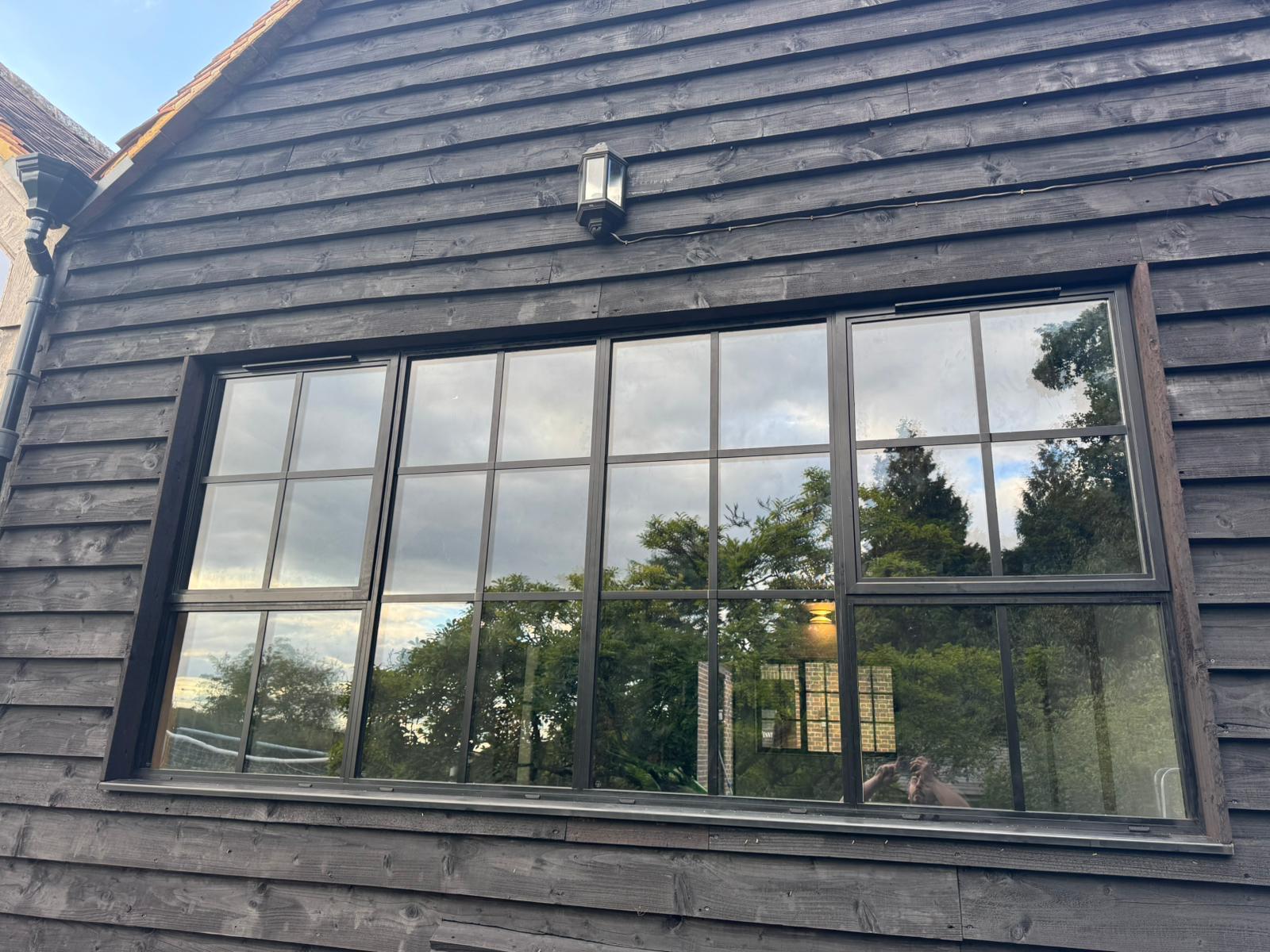
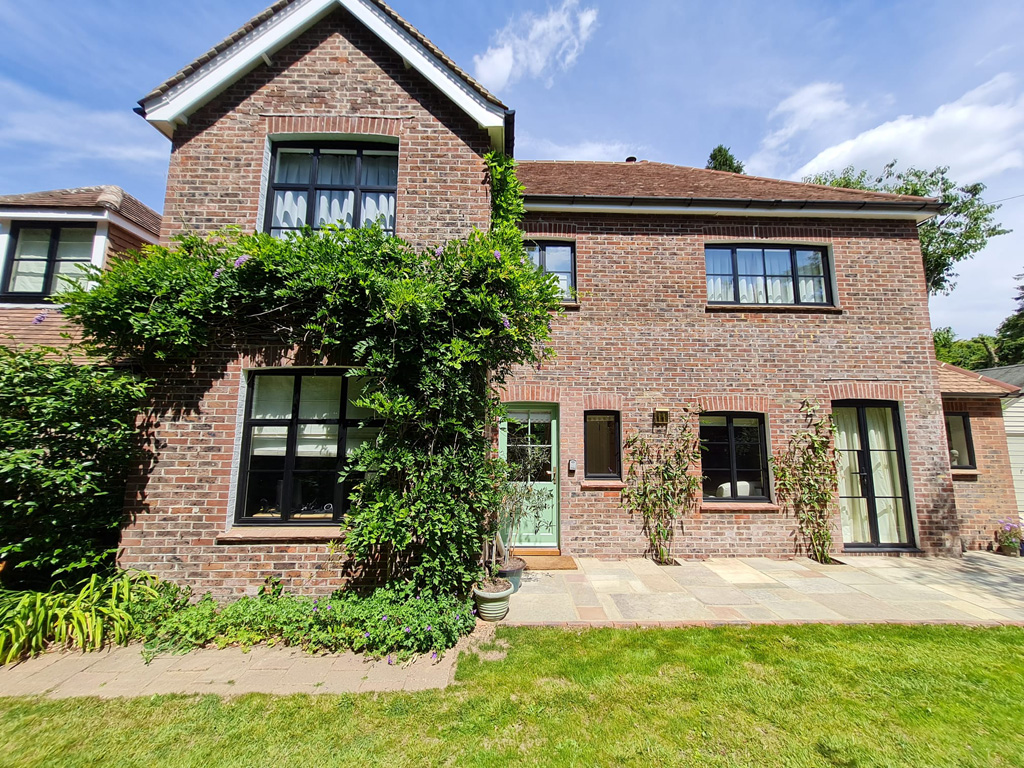
A set of black-framed heritage windows with a period finish, featuring large glass panes and a steel metal window design.

There comes a time when even the most elegant steel casement window begins to struggle — frames that no longer close properly, rust patches beneath the paint, or a chill that no amount of draught-proofing can stop.  Yet for many Surrey and Hampshire homeowners, the idea of replacing them feels almost unthinkable. Those slender sightlines and balanced proportions are part of the home’s soul. The reassuring news is that replacement no longer means compromise. With the right approach, you can improve warmth, security and comfort while keeping every ounce of period character intact. If you’re considering replacing steel casement windows, here’s how to do it well. Why Original Steel Casements Still Matter Steel casement windows were a defining feature of 1920s and 1930s architecture, appearing in Art Deco houses, garden suburbs and post‑war builds that prized light and proportion. Their appeal lies in restraint: fine frames, rhythmic glazing bars and a clean connection between inside and out. At Jennyfields, we often say these windows act like punctuation in a façade — subtle, structural, precise. When replacing them, our goal is to preserve that same cadence.  That means studying the originals closely: the sightlines, the glazing pattern, even the way the hinges were positioned within the masonry. Authenticity starts with observation. Knowing When Replacement Is the Right Step Many period homeowners hope to repair their steel casements, and when the corrosion is limited, that’s usually the best first step. But there’s a point where repair becomes impractical. If frames are distorted, hinges fractured or panes cracked beyond safety standards, replacement is both the safer and more sustainable choice. Under current UK Building Regulations (Approved Document L for dwellings), replacement windows in existing homes must typically achieve a U‑value of 1.4 W/m²K or better, or a minimum Window Energy Rating of Band B. Even with secondary glazing, many old single‑glazed steel windows can’t reach that threshold. Modern replacements do, and do so without thickening the frame or losing that familiar rhythm. Modern Materials with a Period Soul Today’s replacement systems are a world apart from the blunt, chunky frames that once masqueraded as ‘heritage’ options. Thermally broken steel windows replicate the proportions of classic W20 casements but use precision‑engineered profiles (such as W50 or W75), delivering the same visual delicacy with U‑values around 1.2–1.4 W/m²K when paired with quality glazing. These systems retain the crisp lines and strength that define period façades, while meeting every requirement of modern living. Heritage aluminium provides another route. It’s lighter, cost‑effective, and when powder‑coated in deep bronze or soft putty tones, almost indistinguishable from steel at a glance. Many homeowners choose aluminium where conservation constraints allow a little more freedom or where very large openings make weight a factor. At Jennyfields, we work with both — always deciding material by property, not by trend. Detail Is Everything Replacing steel casement windows successfully isn’t about buying a product; it’s about recreating a feeling. That comes from detail: Sightlines that match the original mullions  Ironmongery that feels right in the hand — not oversized or glossy  Finishes chosen to complement existing brickwork or render, whether blackened steel, soft grey or aged bronze  Glazing that balances clarity with texture — from subtly reeded to fine restoration‑look glass  Each element contributes to that quiet integrity that makes a façade feel unspoiled. We make every frame to order, measuring to the millimetre, so proportions remain balanced and consistent across the elevation. Improving Comfort Without Losing Character The performance gains from well‑made replacements are considerable. Thermally broken frames prevent the cold bridging that caused condensation on original steel. Argon‑filled double glazing and modern seals mean draughts are eliminated and indoor temperatures remain stable. Security improves too. Our steel and aluminium windows are built to PAS 24:2022 standards — the benchmark for enhanced resistance to forced entry — and can be supplied under the Secured by Design scheme. For period homeowners, it means peace of mind without visible intrusion: hidden locking points, flush handles and discreet hinges. Navigating Conservation and Listed Building Requirements If your home is listed or lies within a conservation area, the process demands care.  Historic England advises that repair should always be considered first, but replacement may be accepted where decay or poor previous alterations justify it. You will usually need Listed Building Consent, and sometimes planning permission if Article 4 Directions remove permitted development rights.  Local authorities expect replacements to match the originals “like for like” in appearance — frame proportions, glazing pattern and colour. Our design team supports clients through this process, supplying technical drawings, frame samples and full specification sheets for planning officers.  Over years of working with Surrey and Hampshire councils, we’ve developed a clear understanding of what’s acceptable and how to present it convincingly. Installation That Respects Original Fabric Even the best‑made window can disappoint if fitted poorly. We take installation as seriously as design. Openings are surveyed precisely to avoid unnecessary disturbance to surrounding stone, brick or plaster reveals. Existing surrounds are carefully protected, sealants chosen to blend visually, and finishes checked in natural light. Our installers understand that in period homes, less is more. A good installation should disappear, leaving the architecture to speak for itself. Longevity, Maintenance and Value Modern steel and aluminium frames are powder‑coated to an architectural‑grade finish — no annual repainting, no rust treatment, no flaking paint. With only light cleaning, they retain their colour and sheen for decades. That durability translates directly into value. High‑quality, energy‑efficient windows reduce running costs and make heritage properties more appealing to buyers. It’s one of those improvements that quietly raises a home’s standing without altering its essence. In other words, replacing steel casement windows isn’t just maintenance — it’s long‑term stewardship. FAQs Can I replace steel casement windows in a listed building? Yes, but you’ll need Listed Building Consent. The replacements must replicate the original appearance in sightline, glazing pattern and finish. Is aluminium an acceptable alternative to steel? In many cases, yes. Heritage aluminium systems can mirror steel’s look … Read more

bronze casement window

Bronze has long been valued in architecture for its depth of colour, endurance and natural patina. Today, Jennyfields offers bronze casements that capture the same look and beauty of real bronze casement windows and doors — but at a fraction of the cost.  These refined systems bring the timeless aesthetic of architectural bronze to Surrey’s heritage homes while delivering the insulation, security and performance you expect from modern glazing. This guide explores how bronze-finish systems achieve that authentic character, what makes them ideal for period properties, and how Jennyfields designs and installs them with minimal disruption. Why Bronze Casements Stand Out Jennyfields’ bronze casement windows and doors are crafted to replicate the subtle tone and texture of real bronze, offering a distinctive warmth that painted finishes can’t match. The surface treatment captures the richness of bronze while remaining durable, colour-stable and virtually maintenance-free. Key advantages of bronze casements in heritage homes: Slim sightlines – The strength of modern framing allows slender profiles and generous glazing, preserving historic proportions. Authentic bronze tone – A refined metallic finish with depth and warmth that complements brick, stone and timber in Georgian, Victorian and Arts & Crafts settings. Enduring quality – Powder-coated for longevity; no tarnish, no flaking paint, minimal upkeep. Value and prestige – A premium finish that delivers the elegance of bronze with modern efficiency and affordability. These windows are designed to bring architectural character back to traditional homes — perfect for restoring rhythm and refinement to a façade without the cost of solid bronze. Energy Efficiency Meets Tradition Traditional metal windows were often single glazed and poorly insulated. Jennyfields’ bronze casements combine the charm of metal-framed design with up-to-date performance: High-performance glazing – Double or triple glazed with low-E coatings and warm-edge spacers for improved comfort and clarity. Thermal performance – Engineered to meet Approved Document L (Conservation of Fuel and Power), achieving modern U-values while retaining fine sightlines. Acoustic control – Laminated glass options reduce external noise while maintaining the traditional look. The result is a system that looks period-correct but performs to modern expectations — warmer, quieter, and far more secure. A Heritage Match with Modern Benefits For listed and conservation-area homes, authenticity matters. Jennyfields’ bronze casements are designed with the same sensitivity we apply to our steel and heritage aluminium ranges, replicating the sightlines, proportions and detailing of early twentieth-century glazing. Modern benefits include: Multi-point locking for everyday security. Thermally broken frames for superior insulation. Factory-applied finishes that require no repainting. Historic England’s guidance supports like-for-like replacements where appearance and materials are sympathetic — and bronze-finish systems offer precisely that balance of fidelity and performance. Design Options for Every Period Style Each home deserves a tailored approach. Jennyfields’ bronze casements can be specified to suit any period or layout: Finish – Bronze-effect powder coating with subtle tone variations to emulate aged or polished bronze. Glazing pattern – From clean, modern panes to traditional subdivided lights. Opening type – Side-hung, top-hung, fixed lights or bespoke arched forms. Glass options – Clear for light, reeded or frosted for privacy, laminated for sound control. Bronze in Context with Other Materials Choosing the right material is about balancing authenticity, performance and cost. Bronze casements bridge that gap beautifully. They bring the warmth and tonal depth of bronze to period architecture but are lighter, more energy-efficient and far more cost-effective. Compared with timber, they offer greater stability and less maintenance. Against aluminium or steel, they introduce colour and character that evolves gently over time. For many Surrey homeowners, they provide the perfect middle ground. Planning, Listing and Conservation If your property is listed or lies within a conservation area, permissions may be required for replacement windows. Jennyfields provides support through this process — supplying detailed drawings, frame samples and technical data to demonstrate how our bronze casements respect original sightlines and proportions. Conservation officers typically look for: Faithful replication of existing window proportions. Material finishes that complement historic context. Drawings showing section depths, glazing bars and mullions. The Jennyfields Process From design to installation, our process is shaped around care, precision and respect for original architecture: Consultation and survey – Understanding your property’s heritage and design goals. Design development – Agreeing on glazing, finishes and hardware in keeping with the building’s era. Consent support – Providing documentation for planning and listed building approval. Manufacture – Precision-built frames in your chosen bronze finish. Installation – Carried out by our expert team with clean, minimal disruption. Aftercare – Guidance on maintenance and ongoing support. See how this approach carries through in Bespoke Windows for Heritage Homes and Contemporary Extensions Alike. Care and Maintenance Bronze casements require very little upkeep. A light clean with a soft cloth and mild soap keeps the finish looking its best. The powder coating protects against corrosion and UV fading, maintaining colour depth for years. If desired, the tone can be softened over time with gentle waxing, enhancing the natural warmth of the bronze effect. Sustainability and Longevity Built to last, bronze casements have a long lifecycle and support reduced energy use through their thermal performance. Their durable coating means fewer replacements and less maintenance, supporting sustainable building principles. Budgeting and Value Bronze casements sit between heritage aluminium and solid bronze in cost, delivering authentic style at a far more attainable level. Many homeowners choose them for front elevations, or key living spaces where visual impact matters most. They add value through comfort, efficiency and timeless design integrity. FAQs Do bronze casements look like real bronze? Yes. The finish is designed to replicate the tone, depth and texture of genuine bronze — without the high cost or maintenance. Are bronze casements suitable for listed buildings? Often, yes — when proportions and details match the originals. Consent may be required. See Historic England’s homeowner guidance. How energy efficient are they? Our bronze casements meet Approved Document L standards with thermally broken frames and high-spec glazing. Can I keep my original frames? In sensitive settings, secondary glazing can sometimes provide a solution. … Read more

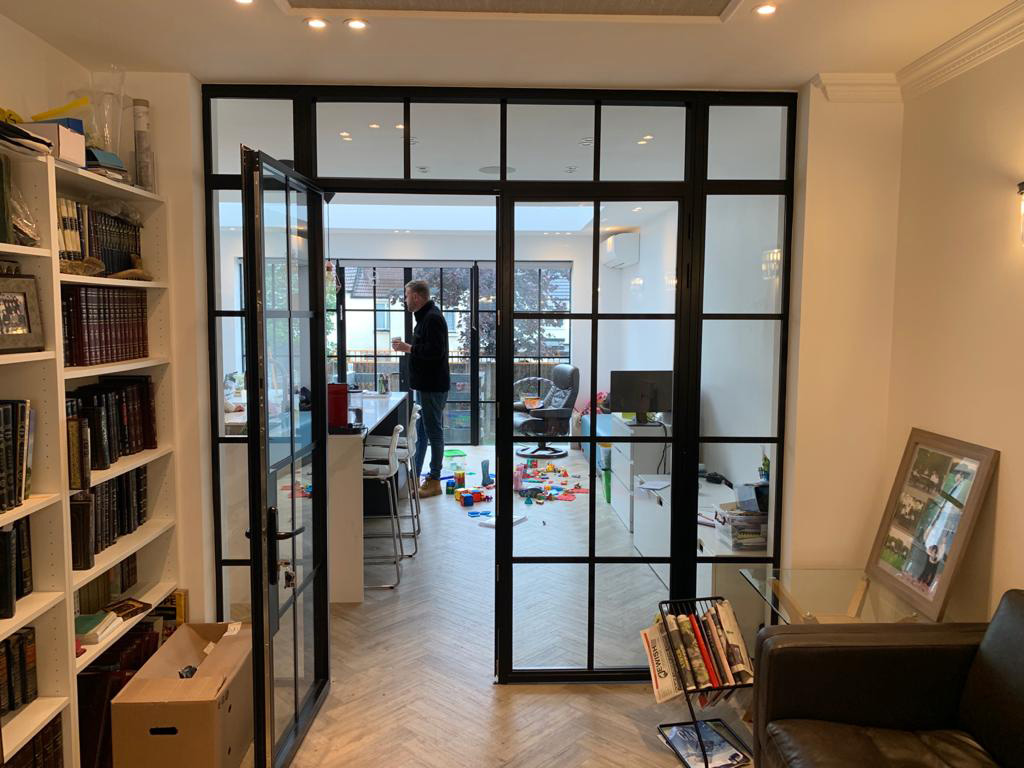
A contemporary home facade featuring floor-to-ceiling black steel doors and windows framed against a red brick exterior.

When you live in a period or character home, your windows do more than keep the weather out. They shape the look of your property, frame the light that enters each room, and influence how your home feels day to day. But if your current windows are ageing, draughty, or failing to insulate properly, you may be sacrificing comfort and paying more on your energy bills than necessary. That’s where steel replacement windows come in. They offer the perfect balance: respecting the heritage style of your home while giving you the modern benefits of warmth, efficiency, and security. Why Upgrade to Steel Replacement Windows? The appeal of steel lies in its strength and elegance. Unlike bulkier alternatives, steel allows for exceptionally slim sightlines, meaning more glass and less frame. This keeps your windows looking authentic to their original proportions while allowing more natural light into your rooms. For homes in Surrey — whether Georgian terraces, Edwardian villas, or Arts & Crafts cottages — this slim, timeless style ensures your windows feel like they’ve always belonged. At the same time, you’re gaining all the performance advantages of a brand-new installation. Key benefits of upgrading: Enhanced kerb appeal without compromising historic character. Increased natural light thanks to larger glazed areas. Modern security features integrated discreetly into traditional styling. Energy Efficiency That Works for Your Home Older steel or timber frames often let heat escape, creating cold spots and draughts. Modern energy efficient window technology changes that. Steel replacement windows are fitted with high-performance double or even triple glazing, combined with insulated frames that dramatically improve U-values. The result: A warmer home in winter, cooler in summer. Reduced heating bills thanks to less heat loss. Improved EPC ratings — a bonus if you ever plan to sell your home. When combined with other efficiency upgrades such as improved insulation or draught-proofing, the savings become even more significant. In many cases, homeowners report energy bills dropping by up to 20–25% following a full window replacement project. In short, you don’t have to compromise style for efficiency. You can enjoy the comfort of a snug home while keeping its historic character intact. A Style That Respects Heritage and Elevates Modern Homes One of the greatest concerns homeowners have is whether new windows will look “right” in a period property. With steel replacement windows, this worry is put to rest. These windows are bespoke-made, designed to echo the original detailing of your home. You can choose from: Heritage steel windows that replicate traditional glazing bar layouts. Art deco replacement windows with striking geometric designs. A wide palette of finishes — from classic black to softer neutral tones that echo historic ironwork. Options for glazing: clear for maximum light, reeded for texture, or frosted for privacy in bathrooms and secondary rooms. This attention to detail ensures your new windows preserve your home’s unique charm while adding a subtle architectural upgrade. Comparing Your Options Homeowners sometimes ask whether it’s better to replace steel windows with aluminium. While aluminium is a strong and versatile material, there are differences worth noting: Aluminium frames: good for thermal performance, but often chunkier, which can jar in a heritage home. Steel frames: incredibly strong, so you get slimmer sightlines, larger panes of glass, and a more authentic look. Some people opt for aluminium steel replacement windows as a compromise — but for period properties where authenticity matters, steel offers the most faithful match while still delivering durability and efficiency. Local Expertise Matters If your Surrey home is within a conservation area, or you’ve got a listed property, replacing windows isn’t as simple as choosing a design you like. Local planning rules often require sympathetic materials and styles. That’s where a trusted local partner makes all the difference. Jennyfields has decades of experience in steel window installation across Surrey and the surrounding counties. We understand how to balance planning requirements with your design goals, ensuring your project runs smoothly from consultation to completion. Our team guides you through: Initial design discussions tailored to your home’s character. Technical drawings and proposals for planning approval. Bespoke manufacturing for a perfect fit. Clean, careful installation with minimal disruption. Long-term aftercare and support. Long-Term Value Beyond Style Steel isn’t just a beautiful material — it’s built to last. Powder-coated finishes resist chips and scratches, while toughened glazing stays secure and clear for years. Unlike timber, you won’t have to worry about warping, rot, or repainting. That durability makes steel replacement windows a smart investment. You gain everyday comfort now and add long-term value to your property. Homes with upgraded windows are more appealing to buyers, often achieving higher sale prices and faster sales. FAQs How much more energy efficient are steel replacement windows compared to original frames? They can reduce heat loss significantly, particularly when replacing single-glazed windows. Many homeowners see noticeable drops in heating costs and improved EPC scores. Can I install steel replacement windows in a conservation area or listed building? Yes — but the design must usually be sympathetic to the property’s character. Working with experts who understand local planning makes the process straightforward. Are steel replacement windows available in custom colours and glazing options? Absolutely. You can choose from a full RAL colour chart, as well as glazing types such as clear, frosted, or reeded glass. How long do steel replacement windows last? With minimal maintenance, they can last for decades. The powder-coated finish protects against wear, and steel’s strength means frames won’t sag or distort over time. Will new windows add value to my home? Yes. Buyers are drawn to homes with efficient, stylish windows — especially when those windows enhance heritage character while lowering energy bills. Ready to Upgrade? Replacing your windows is a big decision, but with Jennyfields it’s an investment you can feel confident about. From design and planning through to installation and aftercare, we specialise in steel replacement windows that transform homes across Surrey. If you’re ready to combine heritage style with modern performance, get in touch today … Read more

internal steel bifold door

There’s a growing desire in modern homes for smart space and flexibility. Homeowners want light-filled interiors that feel open and expansive, yet still provide comfort, definition and privacy when needed. The challenge lies in finding architectural solutions that let you do both: connect and separate, open and close, blend and divide. That’s where internal bifold doors with glass come in. At Jennyfields, we design our doors to help people reimagine how their homes feel and function. From large family kitchens to studio flats and converted period properties, internal bifold doors with glass bring structure, flow and light, all in a format that folds away when not in use. This guide explores what makes them so effective, and how to use them with confidence in any contemporary space. What Are Internal Glass Bifold Doors? An internal glass bifold door consists of a series of glazed panels connected by hinges, which fold neatly to one side when opened. Unlike sliding doors, which typically move one panel behind another, bifolds fold back entirely, opening up the entire width of a doorway or partition. The result is a door that offers maximum flexibility. You can close the doors for acoustic separation and heat control, open them partially for soft zoning, or fold them right back for a seamless connection between two rooms. At Jennyfields, our internal bifold doors with glass are built from slender steel frames and architectural glazing, combining durability and clarity in a format that’s both bold and unobtrusive. The Balance of Openness and Separation Open-plan living has its strengths, particularly in terms of light, social connection and flow, but it isn’t always practical. Noise travels, cooking smells linger, and sometimes you simply want a bit of privacy or quiet without losing the sense of space. That’s where internal bifold doors with glass excel. They let you close off part of a room without cutting it off entirely. You can maintain sightlines, share light between zones, and soften acoustics without shutting yourself in. As Kate Wiltshire Design notes, one of the smartest ways to zone a space is by using architectural features that “break through”, things that suggest boundaries without making them feel rigid. Bifold glass doors are the perfect expression of that philosophy. Where Internal Glass Bifold Doors Work Best These doors are remarkably versatile, but some spaces benefit from them more than others. Popular placements include: 1. Between Kitchens and Living Rooms This is one of the most popular uses for internal bifold doors with glass. When closed, they act as a barrier between the smells, noise, and activity in the kitchen, ideal for families or those who entertain regularly. Yet when folded back, they re-establish that free-flowing, sociable connection that open-plan spaces are known for. They allow a kitchen to be hardworking during meal times, and seamlessly part of the wider space when guests arrive. 2. Home Offices or Studies With more people working from home, the need for quiet, focused workspaces has become essential. Internal bifold doors with glass can section off the home office space and reduce noise from elsewhere in the house, without making it feel claustrophobic. The glass panels also let in natural light and maintain a connection to the rest of the home. This provides a psychological boost when working long hours, and once the day is done, the doors can be folded open to reintegrate the space into everyday living. 3. Hallways and Dining Spaces Connecting transitional spaces like hallways to communal rooms such as dining areas is a smart way to encourage flow while maintaining visual structure. Bifold glass doors in this context can act as a soft barrier, allowing light to travel down hallways while still giving the dining space a defined boundary. During gatherings, the doors can be opened to encourage easy movement. On quieter days, closing them creates a cosier, more intimate setting. 4. Bedroom to Dressing Area or En Suite Privacy is still important in these zones, but that doesn’t mean blocking them off entirely. Reeded or frosted glass panels let you introduce bifold doors that offer discretion while sharing light and a sense of volume. This setup is particularly effective in master suites or converted loft spaces, where a single open-plan floor might include sleeping, bathing, and wardrobe zones all in one. Bifold doors help define those areas without the need for permanent walls. 5. Loft Conversions and Garden Rooms These spaces often have unique layouts, sloping ceilings, unusual sightlines, or deep structural beams. Internal bifold doors with glass provide the perfect solution for working with such quirks. In lofts, they help split bedrooms from landing areas, or reading nooks from storage. In garden rooms or home offices, they provide warmth and enclosure in colder months and can be opened to expand the space during warmer ones. The flexibility adds year-round usability. In short, any area where you’re trying to achieve both openness and enclosure at different times is a strong candidate. Amplifying Light and Space The key benefit of including glass in a bifold door system is the way it distributes light. In deep-plan layouts or older homes where natural light is often concentrated at the front or rear, internal glass bifold doors help to share that light throughout the property. They act as transparent walls, letting light bounce between zones while still creating functional separation. When paired with mirrors, reflective floors, or pale colour schemes, the impact is even stronger. This effect is particularly noticeable in terraced homes or flats, where corridors and living spaces are traditionally divided into smaller rooms. Removing those barriers entirely can feel too stark or too exposed, but swapping a solid wall for bifold glass panels brings light and openness without making the space feel formless. How They Support Contemporary Lifestyles More than ever, homes are expected to perform multiple roles. They’re offices, gyms, schools, sanctuaries and entertainment spaces. Flexibility has become a necessity. Internal bifold doors with glass let you redefine how a space functions in seconds. You … Read more

internal steel doors

There’s a noticeable shift in how people are designing and living in their homes. Light, flow, openness and intentional boundaries are becoming the priorities, and in that space between full walls and totally open-plan, internal steel glass doors are making their mark. These doors do more than simply divide space; they define it, letting light move effortlessly throughout a home, and at Jennyfields, we create internal steel glass doors that work beautifully in modern, light-focused homes. A Modern Solution to a Common Challenge In contemporary homes, people are often trying to balance open-plan living with functional separation. There’s a desire to let light flow through a property, but also to introduce pockets of privacy, structure and calm. Walls can feel heavy, curtains and screens feel temporary, but internal steel glass doors walk the line perfectly. They allow you to zone your home with visual clarity, maintain acoustic separation when needed, let light travel between rooms, and avoid the boxed-in feel that often comes with traditional doors. It’s the combination of transparency and structure that makes them so well suited to contemporary spaces. Why Glass and Steel Work So Well Together Steel is strong, glass is light, and together, they offer contrast and harmony. The strength of the steel creates ultra-slim frames, which means larger panes of glazing. That, in turn, means more natural light, better views, and a greater feeling of openness. Our internal steel door collection is built around this idea: architectural function meets aesthetic precision. You don’t need bulky materials to make a statement, just clean geometry, thoughtful proportions and materials that last. It’s a timeless combination, one that suits everything from loft apartments and new-builds to period homes with updated layouts. Designing for Light Light goes beyond making a room feel good, it changes how the room functions as studies have shown, including those cited by Healthline. Exposure to natural light improves mood, sleep quality and productivity. In design terms. It also expands visual space and supports a sense of calm. Internal steel glass doors  are one of the most effective ways to spread natural light throughout a home. Placing a door between a hallway and kitchen, lounge and study, or bedroom and dressing area helps distribute daylight into deeper parts of the house. When paired with reflective surfaces, polished floors or pale walls, these doors amplify light even further, reducing the need for artificial lighting and creating a consistent daytime atmosphere. Where They Work Best These doors are endlessly adaptable, but they’re especially valuable in homes with limited external windows, deep-plan layouts, converted basements or lofts, and high-traffic zones like kitchens and hallways. In our partitions and room divider range, we’ve used steel and glass to great effect in open-plan homes that need definition without sacrificing space. Instead of building full walls or relying on temporary furniture arrangements, homeowners can install internal steel glass doors that permanently improve the way rooms feel and function. They’re also ideal in home offices or studies, where visual connection is desirable but noise reduction is key. In modern extensions with large open spans, internal steel glass doors can help create quiet corners or reading zones without shutting off natural light. The Psychological Impact of Light More than just an aesthetic decision, internal steel glass doors contribute to overall wellbeing. As the Healthline article outlines, natural light exposure is closely linked to mental clarity, emotional health, and circadian rhythm regulation. In homes where people work, rest, and recharge, this matters more than ever. Thoughtfully placed steel and glass doors help you capture and circulate that light into spaces that would otherwise rely heavily on artificial lighting. Bedrooms become more serene, hallways become inviting, and dining areas feel more open and alive. Matching Your Interior Style While often associated with industrial or minimalist interiors, internal steel glass doors are far more versatile than their stereotype. They work just as well in soft, tactile environments as they do in monochrome modernist schemes. In homes with exposed brick, they create contrast. In crisp, white-painted spaces, they add definition. In period homes, steel and glass doors can sit comfortably alongside traditional mouldings, parquet floors, or steel windows. They provide that linking thread between old and new, especially in renovations or extensions where architectural eras are blending. Design Details That Matter One of the things we always emphasise is that it’s the detailing that elevates these doors from functional to beautiful. Things like: The width and layout of glazing bars The proportions of side or top lights The RAL colour chosen to complement or contrast existing joinery The choice of glazing (reeded, frosted, clear, or tinted) Each of these decisions affects the way the light enters the room, how reflections move through the space, and how the door integrates with its surroundings. Built for You and Your Home Every internal steel glass door we make is custom-built. We don’t use generic sizes or fixed styles. We work with you, your architect or interior designer to make certain that the door feels intentional. This means: Door swing and handle placement match the flow of your room Glazing pattern lines up with furniture, panelling or tiles Colour selection works with the broader palette of your home Fixing details are hidden, clean and precise The goal is to make your door feel like it has always belonged, even if it’s a brand new addition. Durability That Matches the Design Of course, style is nothing without performance. Our steel doors are powder-coated for long-term resilience, and the finish is UV stable so it won’t fade over time. The frames are also designed to resist chips and scratches, and the glazing is secure, safely housed, and easy to clean. These aren’t doors you’ll need to repaint or replace. They’re built for life and for daily use. The hinges are discreet and solid, the handles can be chosen to suit your space, and the whole system is engineered to feel as good as it looks. Light, Logic and Longevity Internal steel … Read more

room dividers, sliding doors internal, room divider partition

In period homes, every detail matters, not just for authenticity, but for how the home feels to live in. Thick walls, original features, generous ceiling heights, and narrow hallways all carry charm, yet they can also pose challenges. How do you divide a space without blocking light? How do you modernise function without disrupting character? One solution that walks that line beautifully is the use of internal steel windows. These are internal architectural features that create zones, frame views, and bring light deeper into a home while keeping the period soul intact, and serve as a distinct alternative to external casements or reproductions of old factory glazing. We specialise in designing internal steel windows blending heritage aesthetics with contemporary precision, and in this guide, we’ll explore how these windows can revitalise your period property and provide perfect balance without ever feeling like an imposition on the past.   What Are Internal Steel Windows? Glazing that sits within a room, not just on its edge An internal steel window is exactly what it sounds like, a fixed glazed frame, often with slim metal bars or muntins, set within an interior wall or as part of a partition. Consider it part wall, part window, part architectural punctuation mark. Unlike steel doors, these windows remain stationary. They can visually open up a space letting light and connection flow through without the need for an open-plan layout. In period homes, they’re often used to: Break up long corridors or stairwells  Introduce light into dark internal rooms  Frame a view between two defined spaces  Create a sense of openness while maintaining separation  Our room divider and partition systems include a variety of steel window formats, from full-height walls with glazing to smaller inset panels that add charm and clarity without disrupting structure.   Why Period Homes Benefit From Internal Steel Windows Modern light levels with period layout charm One of the most common limitations in older homes is light. Long, narrow corridors, boxed-off rooms, and small doorways can make certain areas feel dim or disconnected. Removing walls can help, but it often erases too much of the home’s original layout or character. Internal steel windows offer a middle ground. They let light filter between rooms while preserving the sense of separation that makes period homes feel intimate and cosy. As Self Build points out, internal glazing has become a go-to solution for architects trying to balance period charm with modern expectations for brightness and flow. Whether you’re converting a Victorian terrace, updating a Georgian townhouse or restoring a 1930s semi, these windows allow light to travel without flattening the interior character.   Elegant Division Without Full Separation Create connection, not compromise In period homes, you often want some sense of enclosure, spaces that feel distinct and well-proportioned but you don’t want to lose flow. An internal steel window helps you to create that visual connection between rooms, without turning everything into one undifferentiated open-plan space. Instead of choosing between a full wall and a wide opening, a glazed steel frame offers a third option: definition with depth. You can see through it and enjoy the light it carries, while the rooms on either side still have their own identity. Homebuilding & Renovating suggests using internal windows in hallways, utility rooms, or even between bathrooms and bedrooms (with the right privacy glass). These become design features, celebrating the space rather than simply addressing a dark area.   Complementing Original Features with Modern Contrast Industrial lightness meets traditional weight Steel has always had an industrial feel, slim, strong, intentional. When you introduce that into a period home, the contrast can be incredibly powerful. Against exposed brick, decorative plasterwork, timber floors or antique tiling, a black-framed steel window brings a crisp, minimal counterpoint. It sharpens the look of the whole room. Our period finishes offer options that feel sensitive to heritage homes. We can adjust the colour, glass style and profile of the frame to suit the tone and era of your property, whether that’s a bold, gallery-style matte black or a softer, putty-coloured RAL tone that echoes historic ironwork.   Framing Views and Anchoring Layouts A fixed window can reshape how a home flows We often think of internal features as static, something you work around, but in fact, the right steel-framed internal window can guide how you experience the space. It can draw your eye through to a garden view, highlight a beautiful pendant light or mirror, and even frame the silhouette of a much-loved chair in the next room. This is something interior designers often do intentionally: create lines of sight that help a room feel purposeful and aligned. A well-placed internal window gives you those visual cues that help the home to feel calmer, clearer and more cohesive. Houzz has shown examples of this in homes of every era, from 18th-century townhouses to mid-century bungalows. The goal is clarity and flow, not just to make a space look like a loft apartment.   Tailored for Your Home — a Bespoke Approach Made to measure, built to fit Every home is different and every period home even more so. Uneven floors, irregular wall thicknesses, historic materials and bespoke cornicing all mean that off-the-shelf doesn’t cut it. That’s why we make every internal steel window to order. We work closely with homeowners, architects and interior designers to make sure: Proportions suit the scale of the space  Colours and finishes work with period details  Glazing options support the function of the rooms (clear, frosted, reeded etc.)  Installation is sympathetic to the structure of the home  When creating a glazed partition between kitchen and hallway, or inserting a panel into a thick dividing wall between lounge and dining, we build it around your architecture, not the other way around.   Subtle Improvements That Add Long-Term Value Light, layout and longevity all in one move If you’re thinking about resale, rental or long-term use, internal steel windows are a smart upgrade because they can improve light distribution, modernise … Read more

steel hinged door

Steel is having a moment, and rightly so. Far from being confined to architectural facades or grand structural frames, it’s finding its place inside the home, used for both strength and style. When you pair that resilience with one of the most timeless, intuitive formats, the hinged door, you get something special: steel hinged doors that offer the ideal blend of durability and design. This format combines everything homeowners value most, from strength and security to design flexibility and daily usability, steel hinged doors deliver on every front. At JennyFields, we’ve been crafting bespoke doors for over 40 years from our Surrey workshop, creating precision-engineered solutions that complement the unique character of your space.   What Is a Steel Hinged Door? A classic format with a modern upgrade At its core, a hinged door is exactly what you’d expect: a single door leaf, mounted on one side, swinging open and closed along a fixed axis. It’s familiar, intuitive, and timeless. But when reimagined in slender, powder-coated steel with custom glazing and frame detailing, it becomes something else entirely, refined, graphic, and architecturally sharp. Our steel hinged door collection is designed to work as part of the room’s structure, rather than an afterthought. When paired with matching sidelights or installed as a standalone panel, the result is clean and strong, a purposeful contrast to timber or uPVC alternatives.   Why Choose a Steel Hinged Door? Design integrity meets real-world performance A steel hinged door is more than a design feature, it’s a practical, durable upgrade for homes that need structure, style, and dependability. It offers a clean, minimalist look while still delivering tactile presence and a reassuring sense of permanence. In our benefits guide, we explore how steel internal doors improve light, layout, and overall value, and hinged formats are often the most adaptable of all. Unlike sliding or pivot systems, which can require more planning or clearance, hinged doors work almost anywhere. They’re equally suited to busy hallways, compact rooms, or grand entrances.   Unmatched Strength and Durability Why steel outperforms other materials According to Build With PMC, steel is prized in architecture for its unmatched tensile and compressive strength. Unlike timber, which can warp or crack, or aluminium, which can dent under pressure, steel maintains structural integrity over decades. That strength translates beautifully to internal doors. With a steel hinged door, you get a frame that can support large panes of glass without compromise. You get reliable weight distribution that won’t sag over time, and you get consistent, silent operation, day after day, year after year. All of our doors are made with precision-welded corners, reinforced fixing points, and discreet hinges that maintain a clean profile. JennyFields also finish every frame with a tough, powder-coated surface, so maintenance is minimal.   Everyday Functionality with Timeless Appeal The format you already love, made better There’s a reason hinged doors remain the most common format in homes, they’re easy to use, versatile, and spatially intuitive. You instinctively know how they work. They suit both traditional and contemporary floor plans, and they play nicely with furniture, art, and built-in joinery. A steel hinged door keeps all those advantages but elevates the experience further. Instead of bulky frames and generic panels, you get slim sightlines, balanced glazing, and a crisp finish that becomes part of the room’s visual identity. Used as an entrance to a lounge, a transition between kitchen and dining, or an office door that needs both privacy and presence, this format always feels right.   Sustainability and Longevity A recyclable material with a long lifespan Steel is strong and highly recyclable,  and according to Recycle More, it’s one of the most reused materials in the world, with an excellent lifecycle for both production and repurposing. Choosing steel hinged doors over lower-quality materials represents a more sustainable choice, one that lasts longer, resists damage, and won’t need frequent replacement. It’s a practical way to reduce material waste over time, especially in homes or buildings designed with longevity in mind. Our approach is to build once, build well, and build beautifully, so you won’t have to think about replacing it in five years.   Tailored to Your Space and Style Custom colours, configurations, and finishes One of the biggest advantages of a steel frame is its versatility, and because it’s so strong, you can do more with less, thinner frames, larger panels, and more expressive proportions. If you want to match an industrial interior or soften a modern space with elegant detailing, we can tailor the frame and glazing exactly to your needs. We work with the full RAL colour chart  to offer a wide spectrum of powder-coated finishes. You’re not limited to matte black (although it’s a classic); you can choose deep blues, off-whites, soft neutrals or earth tones, whatever suits your palette. You can also select: Clear, frosted, or reeded glass for different levels of transparency  Matching sidelights or top panels to extend the visual rhythm  Single or double door formats, depending on your opening  Because each door is made to order, we always make sure that the proportions, sightlines and movement work with your architecture, never against it.   Where Steel Hinged Doors Work Best While steel hinged doors are versatile enough to work just about anywhere, they really shine in rooms where you want structure, elegance, and clarity. Some of the most impactful applications include: Entrance to living rooms: Framing views from hallways or foyers, giving the space a sense of arrival. Kitchen to pantry or utility areas: Offering visual privacy while still keeping the layout fluid. Home offices: Providing acoustic separation with a crisp, modern aesthetic. Bedrooms to dressing areas or en suites: Adding softness and transparency without losing function. As these doors open in a single, sweeping motion, they’re perfect in spaces where you want ease of use and a sense of ceremony, without the visual weight of solid timber.   Low Maintenance, High Performance Steel is about ease as much as elegance. Once installed, … Read more

Download Our Brochure!

Explore our collection of steel windows and doors. Download our brochure for inspiration and design options.

Popup form
Name
Name

Download Our Brochure!

Explore our collection of steel windows and doors. Download our brochure for inspiration and design options.

Popup form
Name
Name