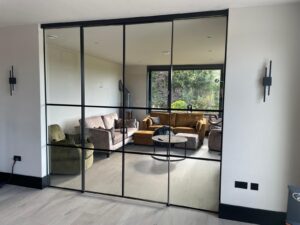
If you’re wondering whether to replace steel windows with aluminium, now is often the best time to act. Old steel frames rarely fail neatly, they tend to deteriorate until you are forced into quick decisions.
Choosing thermally-broken, steel-look aluminium while you still have time to plan helps you protect the look of your home, improve comfort and usability, and manage permissions and compliance paperwork properly.
This article is for homeowners in period and character properties with older steel frames (often single glazed) that are draughty, corroded, or difficult to operate.
Jennyfields works across Surrey and surrounding counties, and you can see options in person at our Farnham showroom (details on our contact page).
Planning and Building Regulations references are based on England and Wales, but local approaches vary, so the safest habit is always to check with your local authority.
One important point before we get into it: in some heritage contexts, conservation bodies often prefer repair-first where windows are significant and capable of being conserved. Replacement can still be appropriate, but it needs a clear justification and careful specification.
Why now is often the best time
‘Now’ does not mean ‘panic’. It means acting while you still have options.
Steel frames tend to drift from ‘a bit tired’ to ‘a real problem’ in ways that are easy to underestimate. Once paint systems fail, corrosion can accelerate. Hardware can become unreliable, openings get harder to use, and you may start living around the windows rather than enjoying them. If condensation is part of the picture, cold metal and leaky junctions can make it harder to keep internal surfaces warm enough to avoid moisture settling, especially if you’ve been closing vents and blocking draughts just to stay comfortable.
There is also a practical ‘paperwork’ reason. If you plan the project, you can follow the right compliance route and keep a clean file of documents that often matter later (especially when selling). You also have time to get the look right, which is the part most people regret when it is rushed.
What ‘replacing steel windows with aluminium’ actually means
When people ask about replacing steel frames with aluminium, they usually mean fitting slim aluminium windows engineered to mimic steel. You’ll also see them described as ‘steel-look aluminium’, ‘steel replacement windows’, or even ‘Crittall-style’ as a generic market shorthand.
What changes is not just the material. A true replacement typically updates the glazing unit, the seals, and the hardware as well. That matters, because the comfort and usability gains usually come from the whole package working together, not from aluminium on its own.
If you want a feel for what the category looks like in practice, start with Jennyfields’ overview of steel window replacements.
What a thermal break is, and why it matters in aluminium replacements
A thermal break is an insulating barrier inside the frame that separates the internal and external parts of the aluminium profile. Many systems use polyamide for this barrier.
In plain English, it is the bit that helps stop metal acting like a direct ‘bridge’ for heat. That does not magically solve condensation (humidity and ventilation still matter), but it can reduce the conditions that make cold surfaces and uncomfortable edges more likely.
If you want the mechanics explained clearly, Exlabesa’s guide to a polyamide thermal break is a helpful reference.
Can you always replace steel windows with aluminium in the UK?
Often, yes, but it is not something to assume without a quick permissions check.
For many homes, window replacement can fall under permitted development, particularly where the appearance stays similar. But the moment your property is listed, in a conservation area, subject to an Article 4 Direction, or you are changing the look in a visible way, the route can change.
A good first read is the Planning Portal’s guidance on planning permission for doors and windows. It gives the baseline and shows where the exceptions tend to bite.
Conservation areas and Article 4 Directions: what homeowners need to know
A conservation area does not automatically mean you need planning permission for every change, but it does mean the local authority is more likely to be sensitive to visible alterations.
An Article 4 Direction is especially important because it can remove permitted development rights. In practice, that can turn a ‘normally permitted’ window change into one that needs formal permission.
Historic England’s advice on repairing or changing windows in an older home is a sensible place to ground your expectations, because it speaks directly to the way character and permissions interact.
If you want to see an example of how specific some councils can be, Lewisham’s page on replacement windows in conservation areas and listed buildings shows the kind of information local authorities sometimes publish.
Listed buildings: is window replacement allowed at all?
Listed buildings often require listed building consent for changes that affect character. In many cases, the expectation is that you assess what is significant, conserve what can reasonably be conserved, and justify replacement only where it is necessary and appropriate.
Historic England’s technical guidance on modifying historic windows as part of retrofitting energy-saving measures is worth reading if your home is listed or you suspect it may be.
The step-by-step process for replacing steel windows with aluminium (done properly)
A good project is survey-led and calm. It starts with understanding the openings and the constraints, then deciding on the look, and only then moving into specification and manufacture.
In practice, you will usually go through: an initial conversation and photo review, a site survey and measurements, design choices (sightlines, bar layout, openings, hardware, finish), any permissions and drawings if needed, manufacture and finishing, then installation, making good, snagging, and handover.
If you want the Jennyfields view of the category and what is involved, the steel replacement windows page is the most direct starting point.
How to keep the ‘steel look’ right: sightlines, proportions, and details
This is where most replacements either succeed or disappoint.
The ‘steel look’ is built on proportions. If the frame becomes too chunky, or the glazing bars don’t match the original rhythm, your façade can lose its character even if the windows are technically excellent.
When you’re reviewing options, it helps to talk in specifics. Ask to see close-up photos of the outer frame and sash sightlines, confirm how glazing bars are formed, and check whether the mullions and transoms can align with your existing elevation pattern. Hardware matters too, especially on principal elevations, because overly modern handles and vents can make a traditional window look busy.
For a deeper comparison, Jennyfields has a useful guide on steel vs aluminium windows.
Common problems old steel frames create (and what replacement does not solve)
Older steel windows can be beautiful, but the problems are familiar: corrosion, failing paint, sticking mechanisms, draughts as tolerances open up, and cold surfaces that can make comfort harder to manage.
Replacing steel frames with a modern aluminium system can address many of these issues through tighter tolerances, improved sealing, and upgraded glazing. But it is not a silver bullet.
Condensation, for example, can still happen if indoor humidity stays high or ventilation is reduced. Cold bridging around reveals can still matter if the surrounding fabric is poor. And in heritage settings, the best-performing window is not always acceptable if it harms character.
If you are wondering whether your steel frames should be repaired instead, the SPAB’s guidance on metal windows is a good, conservation-minded reference point.
If you already own steel windows and want to understand maintenance expectations, Jennyfields’ guide on how to maintain your steel windows and doors can help you judge whether refurbishment is realistic.
What affects the cost of replacing steel windows with aluminium
Costs are normally driven by specification and site complexity, not a standard ‘per window’ figure.
The main factors tend to be the size and configuration (including bays and unusual shapes), the opening styles and hardware, the glazing specification, the bar layout complexity, the finish, site access and protection, and the amount of making good required around the opening. In heritage contexts, drawings and additional detailing can also shape the scope.
If you want a general explanation of how window costs are built up without getting drawn into headline price lists, Homebuilding’s overview of new window costs is useful for understanding the drivers.
The biggest mistakes homeowners make when replacing steel frames
Most regrets come from three things: a system that looks visually too heavy, skipping the permissions checks, or treating installation detailing as an afterthought.
A few quick ‘watch-outs’ are worth keeping in mind because they show up again and again in real homes.
If you want one simple rule: never sign off on a quote until you have seen close-up sightline photos of a comparable job, and you have confirmed what your local authority expects (especially in conservation areas or where Article 4 applies).
Repair vs replace: how to decide without regret
If your home is historic or in a sensitive setting, ‘repair-first’ is usually the right starting posture. Replacement becomes more sensible when corrosion is widespread, the frames are distorted or repeatedly failing after refurbishment, or when your comfort and usability needs can’t realistically be met without a new system.
Historic England’s retrofit guidance on modifying historic windows is the best place to anchor this decision if your home is listed or highly sensitive.
Building Regulations (Part L) and U-values: what you actually need to know
Replacement windows are generally covered by Building Regulations, and Part L relates to energy performance.
A U-value describes how readily heat passes through an element. With windows, what often matters is the whole-window performance (frame and glazing together), not the glass alone.
Because requirements and compliance routes can change, treat any U-value discussion as date-sensitive.
- As of February 2026: the safest approach is to use the current Approved Document and your installer’s specification to confirm what applies to your project.
For the primary source, see the government’s Approved Document L: Conservation of fuel and power (Volume 1, dwellings).
For a plain-English industry summary that references those requirements, the BWF’s note on updated U-value requirements is a helpful companion.
What a FENSA certificate is, and when you need one
A FENSA certificate is evidence that relevant replacement window and door installations comply with Building Regulations when completed by a FENSA-registered installer. It is also one of the documents homeowners are often asked for during a sale.
If you want the straight definition and what it is used for, start with FENSA’s page on finding and ordering your FENSA certificate, then follow through to the scheme overview at FENSA.
How to choose the right company for steel-look aluminium replacements
This part is simpler than it sounds. You are looking for a supplier who can prove they understand proportions, and who can manage the planning and detailing risk.
Ask to see comparable installs, ask how they keep sightlines slim, and ask what support they can provide if you need drawings for permission. Clarify who is responsible for making good, how snagging is handled, and what compliance documentation you will receive where applicable.
If you are exploring options locally, Jennyfields’ steel window replacements page shows the service focus and the kind of projects they support.
Alternatives to aluminium steel replacements (and when they win)
If replacement is not the right move, there are a few sensible alternatives.
Refurbishment can be the best choice where steel windows are significant and repairable, but it does come with ongoing maintenance and it may not deliver the performance step-change you want.
Secondary glazing can improve comfort while keeping external change minimal (Planning Portal mentions internal secondary glazing as generally not needing permission in many cases, but you should still check locally via its guidance on doors and windows planning permission).
And if authenticity is the priority and budgets allow, new steel can be appropriate, with the trade-off that maintenance and cost can be higher.
Timelines and what ‘good’ looks like at handover
Timelines vary with design complexity, permissions, and manufacture schedules, so it is safer to plan around quality checks rather than specific dates.
At handover, you should be looking for consistent sightlines across the elevation, smooth operation on every opening, tidy seals and finishing, neat making good around the reveals, and a clear snagging route if anything needs adjustment. Where applicable, you should also receive the relevant compliance documentation, including a FENSA certificate.
Next steps
If you’re weighing repair vs replacement, or you simply want to see what ‘steel-look’ aluminium actually looks like in person, the lowest-risk first step is an informed conversation.
You can start by visiting the Farnham showroom or getting in touch via our contact page. If you can, send a few photos, your postcode, and a note on whether you’re in a conservation area or the property is listed. It makes the early advice far more specific.
FAQs
Can I replace steel windows with aluminium and still keep a heritage look?
Often, yes. Steel-look aluminium systems are designed to mimic steel sightlines and grids, but the result depends on proportions, glazing bar layout, and detailing. In sensitive settings you may still need permission, so treat ‘look’ and ‘consent’ as linked decisions.
Do I always need planning permission to replace windows in a conservation area?
Not always, but conservation areas often have extra controls and an Article 4 Direction can remove permitted development rights. Check your local authority guidance before ordering, especially if you are changing material or appearance.
What is a thermal break in aluminium window frames?
A thermal break is an insulating barrier within the metal frame that separates inside and outside parts of the profile, often using polyamide. It reduces direct heat transfer through the frame and supports better overall performance.
Should I repair old steel windows instead of replacing them?
If the windows are historic and repairable, repair is often the right starting point. Replacement becomes more sensible where corrosion or distortion is severe, where repeated refurbishment has failed, or where your performance needs cannot realistically be met through repair.
Do replacement windows need to meet Building Regulations (Part L)?
Generally, yes. Part L covers energy performance and requirements can change over time. Ask your installer how the whole-window performance will be specified and evidenced.
What is a FENSA certificate and why does it matter?
A FENSA certificate is evidence that relevant replacement window and door installations comply with Building Regulations when completed by a FENSA-registered installer. It is often requested during a home sale, so keep it with your property records.