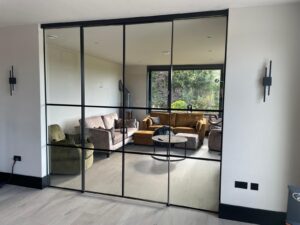
Steel windows are chosen for their strength, precision and longevity. But what many homeowners only realise later is that the performance and lifespan of steel windows depend just as much on how they are installed as on the windows themselves.
A poorly installed steel window can lead to draughts, condensation, misalignment and visual disruption. A well-executed steel window installation, by contrast, is a once-in-a-generation upgrade. Done properly, it improves comfort, security and architectural clarity for decades, without asking for attention or ongoing maintenance.
At Jennyfields, we’ve spent many years installing steel windows in period homes and contemporary projects across Surrey and the South East, where accuracy, care and respect for existing architecture matter.
This is why installation is never treated as an afterthought.
What Steel Windows Offer That Other Materials Can’t
Steel is fundamentally different from timber or uPVC. Its exceptional strength allows for ultra-slim frames and refined sightlines that other materials struggle to achieve. This makes steel windows particularly well suited to homes where proportion and rhythm matter, whether that’s a Victorian terrace or a modern extension with large glazed openings.
Steel also offers longevity that few materials can match. Properly finished and installed, steel windows can last for many decades with minimal maintenance. They don’t warp, swell or degrade in the way other materials can.
When homeowners choose steel, they are rarely doing so for short-term reasons. They are investing in something enduring. That makes the quality of the steel window installation just as important as the window itself.
Why Steel Window Installation Is Not a Standard Job
Installing steel windows is not the same as fitting off-the-shelf replacements. The tolerances are tighter. The weight and rigidity of steel demand careful handling. Alignment is critical, both structurally and visually.
Small inaccuracies that might go unnoticed with other materials become obvious with steel. A frame that is a few millimetres out of square can disrupt sightlines across an entire elevation. Poor fixing can affect long-term stability. Inadequate sealing can compromise thermal performance.
This is why steel window installation is best approached as a precision task rather than a routine trade job. It requires planning, experience and a clear understanding of how steel behaves over time.
Getting the Foundations Right
Long-lasting installations begin well before installation day.
Accurate surveying is essential. Existing openings are measured carefully, masonry is assessed, and allowances are made for tolerances, thermal breaks and finishes. In older homes, this often includes understanding how original brickwork or stone has moved over time.
Structural preparation matters too. Lintels, reveals and fixing points must be suitable for steel frames. Addressing these details early prevents compromise later and ensures the windows sit comfortably within the building fabric rather than fighting against it.
This preparatory work is what allows steel windows to look settled and intentional once installed.
Installation Day: What Good Looks Like
A well-managed steel window installation is calm and methodical.
Surrounding finishes are protected. Existing windows are removed carefully to avoid unnecessary damage. Steel frames are positioned precisely, checked repeatedly for alignment, and fixed securely. Seals and glazing are installed with attention to detail, ensuring airtightness without visual bulk.
The emphasis is not on speed, but on accuracy. When done properly, disruption is kept to a minimum and the home is left clean, secure and weather-tight at the end of each day.
This approach reflects respect for both the building and the people living in it.
Performance Over Time
Correct installation has a direct impact on how steel windows perform over the long term.
Proper alignment and fixing help maintain thermal efficiency and prevent draughts. Thoughtful sealing reduces the risk of condensation by keeping internal surfaces warmer. Structural stability improves acoustic performance and security.
These benefits are not always immediately obvious, but they become increasingly apparent over the years. Windows continue to open smoothly. Finishes remain intact. Performance stays consistent rather than gradually declining.
This is what turns steel window installation into a long-term investment rather than a short-term improvement.
Steel Window Installation in Period and Heritage Homes
Older properties require a particularly sensitive approach.
Period homes rely on proportion and visual rhythm. Openings are rarely perfectly square, and original materials often need to be respected rather than replaced. Steel windows work well in these contexts precisely because their slim profiles sit comfortably within traditional elevations.
Installation in heritage settings focuses on preserving sightlines, aligning frames carefully within existing openings, and ensuring that any improvements feel sympathetic rather than imposed.
Historic England’s guidance on upgrading windows in older buildings emphasises the importance of visual integrity alongside performance, particularly in conservation areas.
This balance between respect and improvement is where experience makes a real difference.
Maintenance, Longevity and Aftercare
One of the reasons steel windows are chosen is their longevity.
High-quality powder-coated finishes protect against corrosion and weathering. Day-to-day maintenance is minimal, usually limited to cleaning and occasional checks of moving parts. Unlike timber, there is no repainting cycle to manage.
Over time, steel windows age quietly. They retain their shape, their alignment and their performance. With appropriate aftercare, it is entirely realistic to expect steel windows to last several decades.
This durability is what makes steel window installation a genuine long-term upgrade rather than a recurring project.
Frequently Asked Questions
How long does steel window installation take?
Timeframes vary depending on the number of windows and the condition of existing openings, but careful preparation keeps disruption manageable.
Will steel windows feel cold in winter?
Modern steel windows, when correctly installed, offer strong thermal performance and avoid the cold bridging associated with older systems.
Are steel windows suitable for conservation areas?
Yes, when designed and installed with appropriate proportions and detailing.
Is steel window installation disruptive?
A considered installation process minimises disruption and protects surrounding finishes.
How long should steel windows last?
With proper installation and care, several decades is a realistic expectation.
A Long-Term Upgrade Done Properly
Steel windows are chosen because they endure. Their slim profiles, strength and visual clarity make them a natural fit for homes where quality matters. But it is installation that determines whether that promise is fulfilled.
A careful steel window installation protects performance, appearance and longevity, ensuring the windows continue to work quietly in the background for years to come.
If you’re considering steel windows and would like advice grounded in experience rather than sales pressure, you’re welcome to explore our steel window expertise or get in touch for a design-led conversation about your home.